Taylorsville Foundation Pros
Wall Stabilization in Taylorsville, UT
Bowing basement wall repair in Taylorsville, UT with steel anchors, I-beams, and carbon fiber straps. Free estimates available.
Serving Taylorsville and nearby communities.
Spring snowmelt and winter freeze-thaw cycles push a lot of water into the soil around Taylorsville basements, and that saturated soil presses against basement walls as hydrostatic pressure builds. On older full-basement homes in the area, that pressure shows up as a bowed wall, horizontal cracking, or a wall that's visibly leaning inward at the top.
Taylorsville Foundation Pros stabilizes bowing walls before they progress to a point where the wall can't be straightened. We assess the degree of bow and choose anchors, bracing, or carbon fiber reinforcement based on how far the wall has already moved.
What's included
What's included with Wall Stabilization
Typically included: wall inspection, pressure assessment, and installation of the chosen reinforcement system (anchors, I-beams, or carbon fiber). Optional: exterior grading correction or drainage work to reduce the hydrostatic pressure causing the bow in the first place. Customer prep: clear basement floor space along the affected wall and note when the bowing seems to worsen (after rain, snowmelt, etc.).
Want a clearer scope?
Get a Free EstimateHow it works
How our Wall Stabilization process works
 Step 1
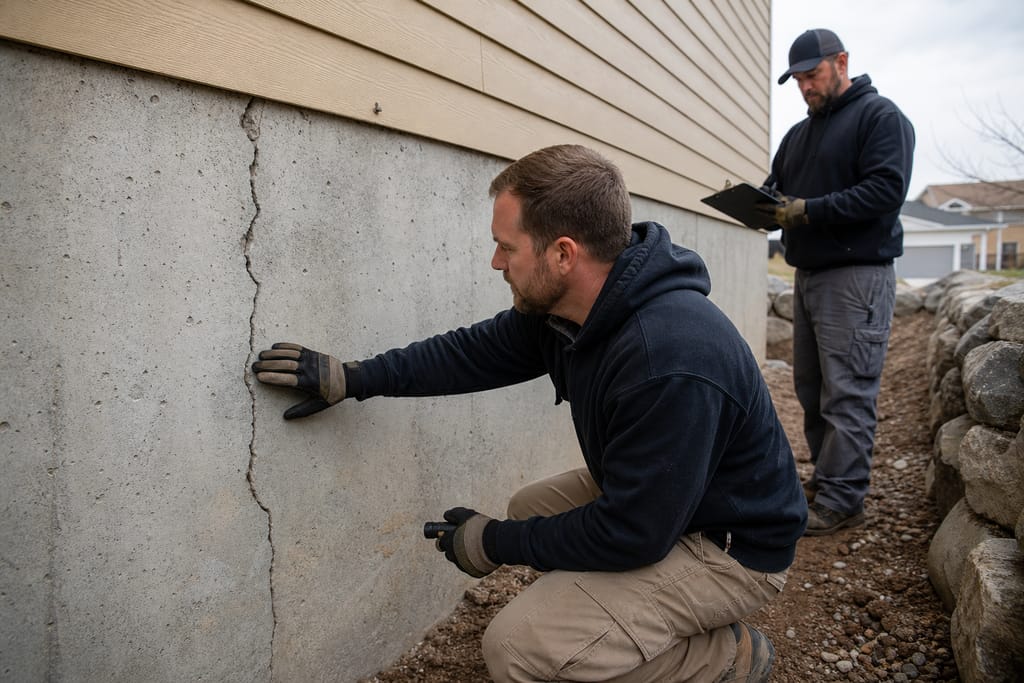
Wall Inspection
Walls are examined for bowing, cracking, or leaning indicators.
 Step 2
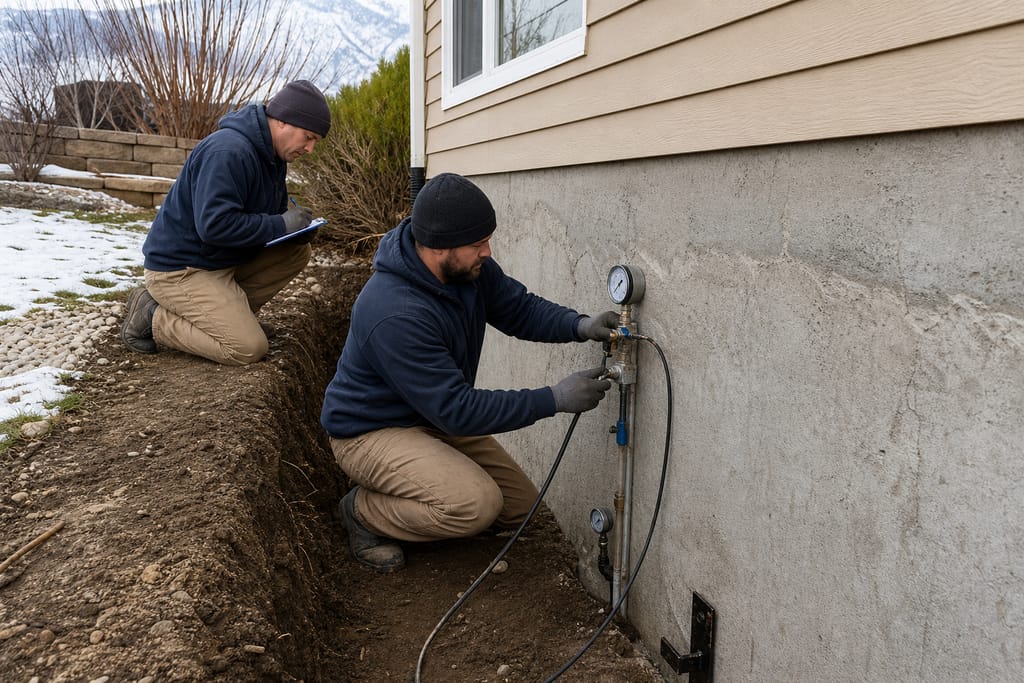
Pressure Assessment
Soil and hydrostatic pressure contributing to wall movement are evaluated.
 Step 3
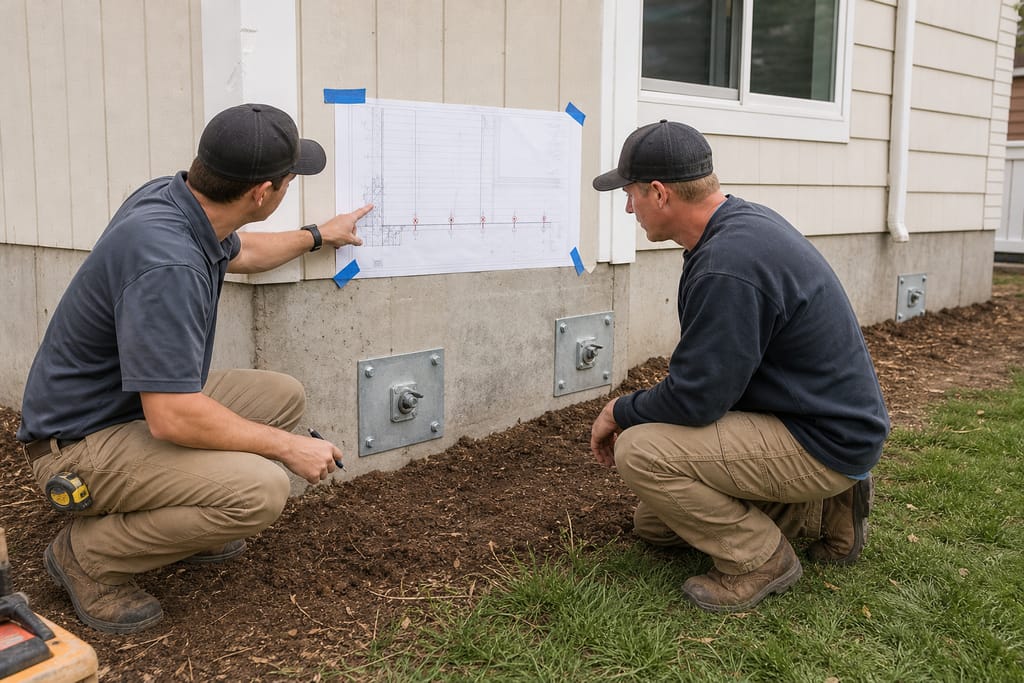
Reinforcement Planning
A stabilization method is selected based on wall condition and severity.
 Step 4
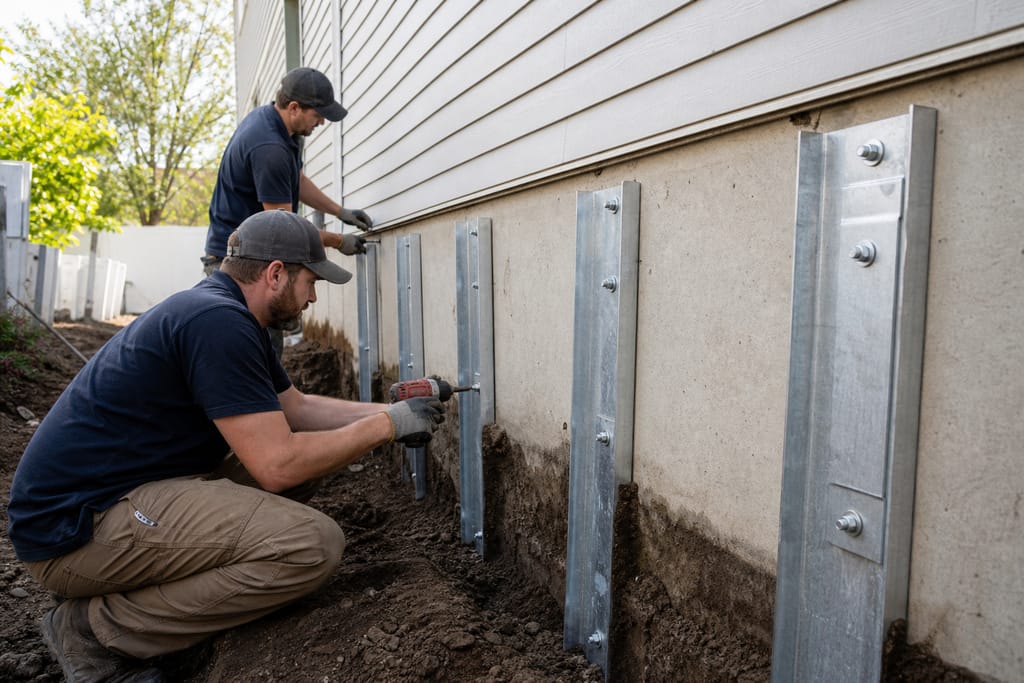
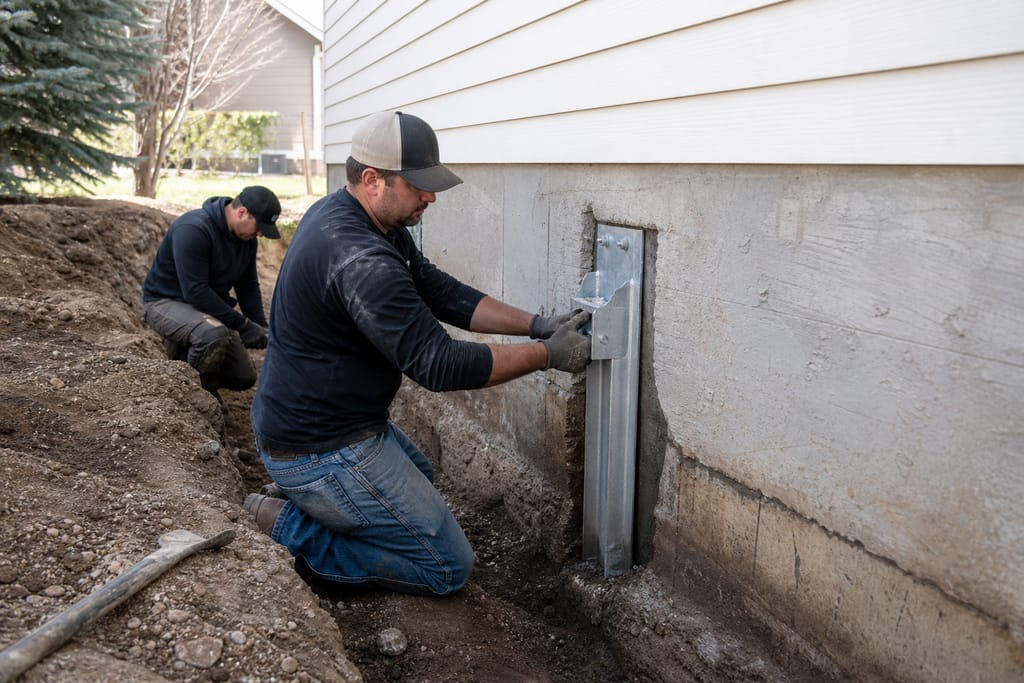
Anchor or Brace Installation
Support systems are installed to halt further wall movement.
 Step 5
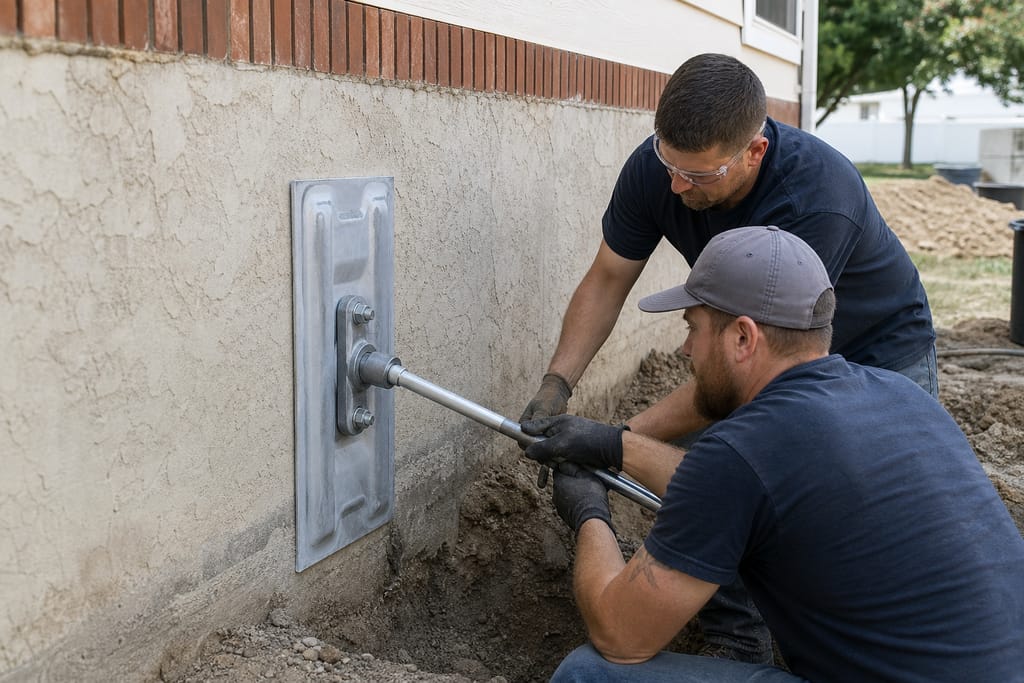
Tensioning Adjustment
Anchors or braces are tightened to gradually stabilize the wall.
 Step 6
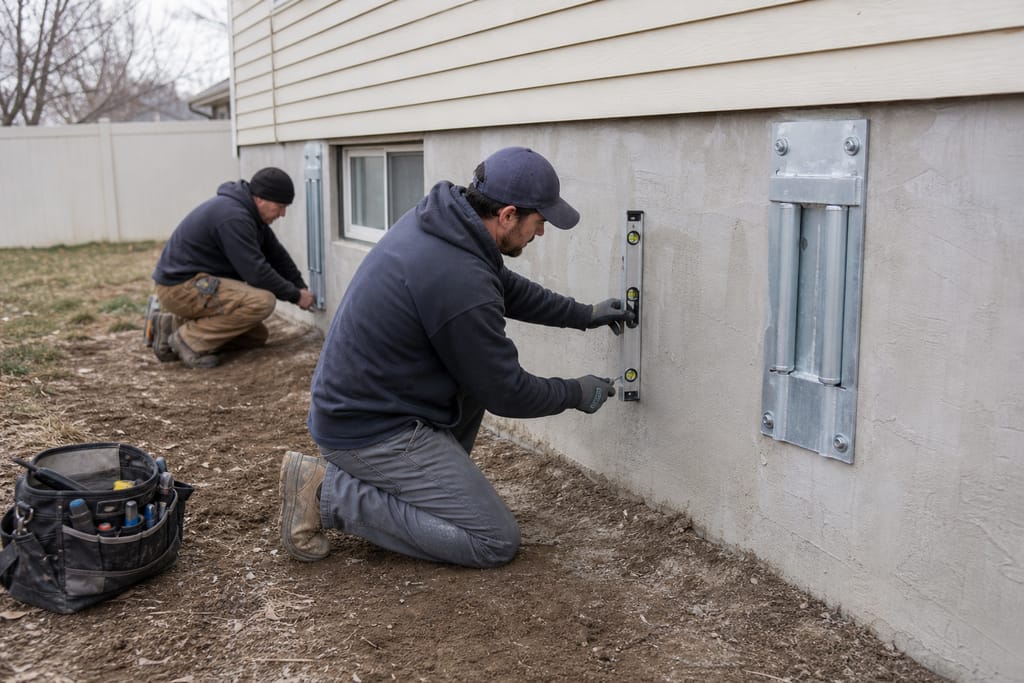
Final Inspection
The wall is rechecked to confirm stability and proper installation.
Materials
Materials and methods for Wall Stabilization
Which system we use depends on how far the wall has bowed and whether yard access allows anchor placement.
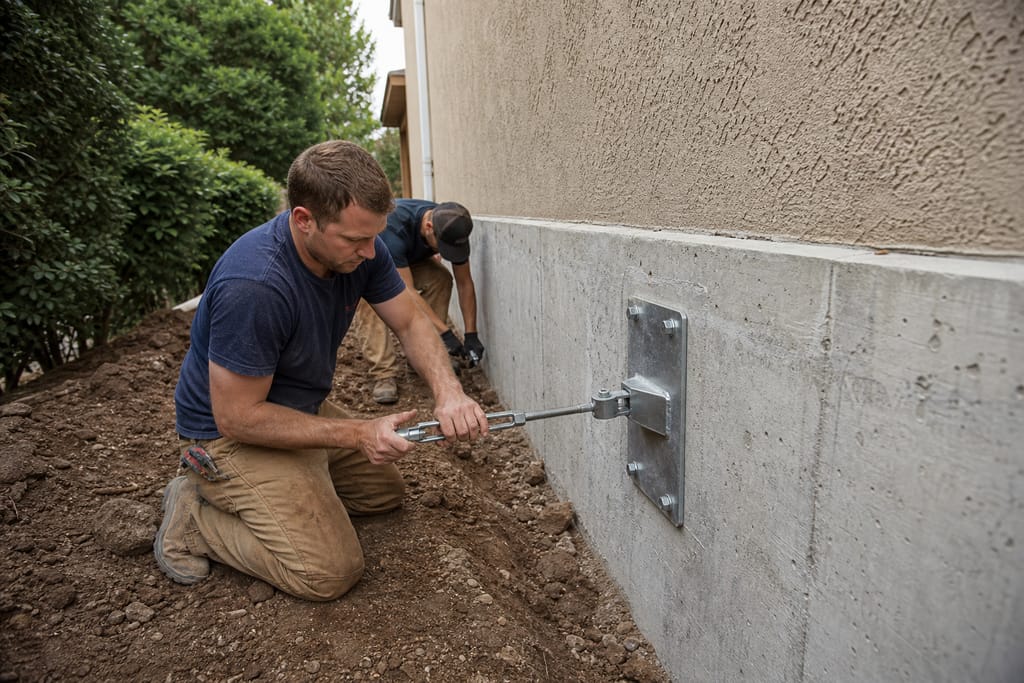
Wall Anchors
Installed in the yard to counteract inward wall pressure from saturated soil after snowmelt.
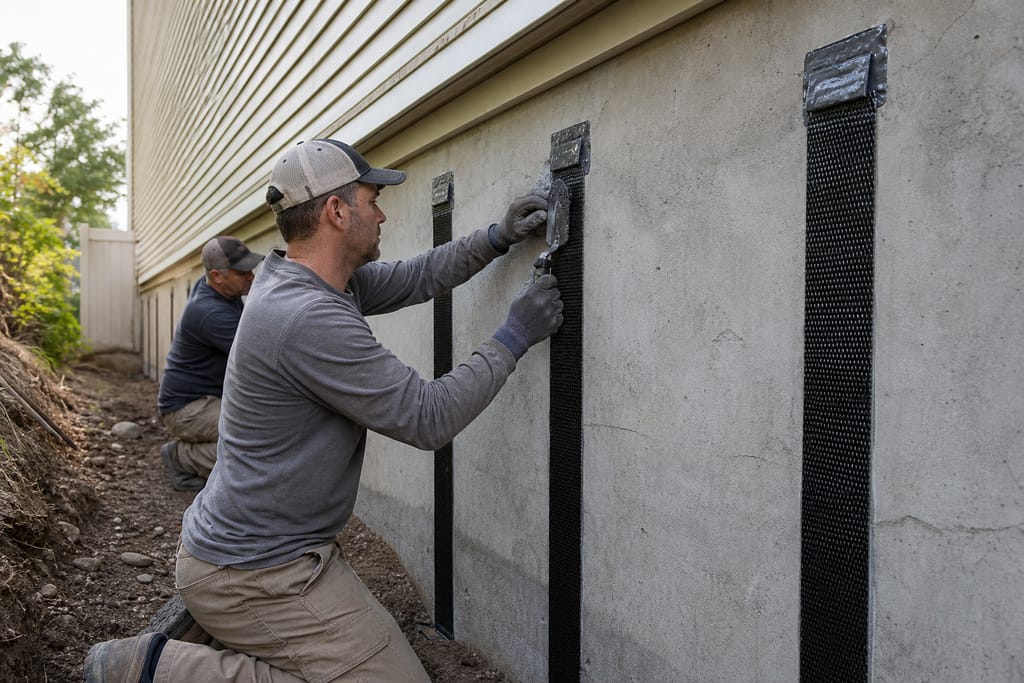
Carbon Fiber Straps
Reinforce walls without requiring extensive excavation, a good fit for early-stage bowing.
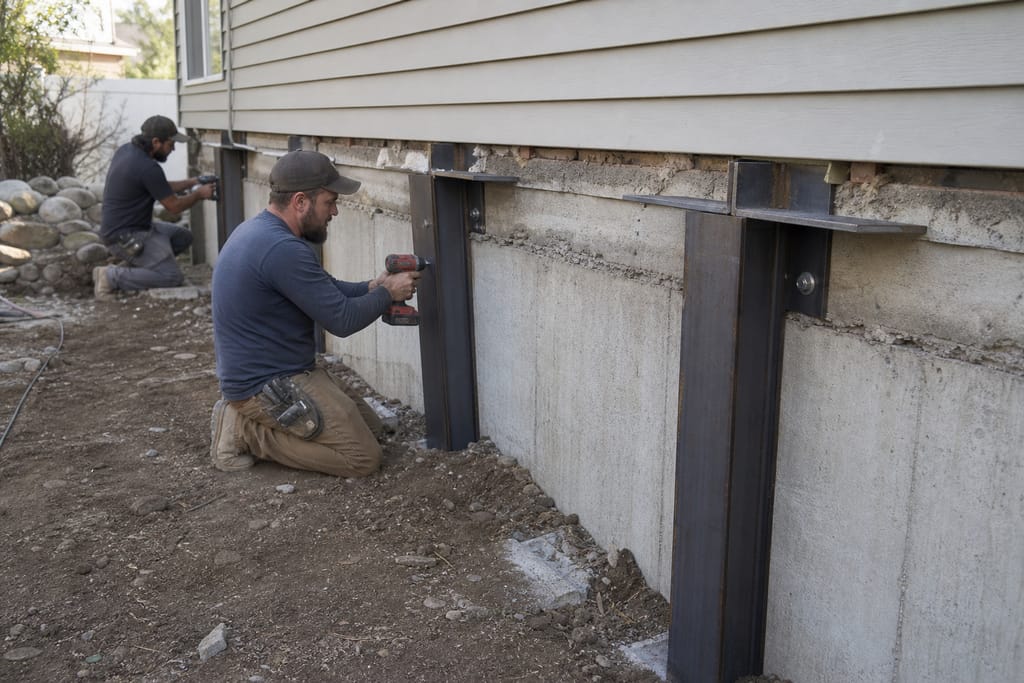
Steel I-Beams
Provide rigid bracing against lateral wall movement on more advanced bows.
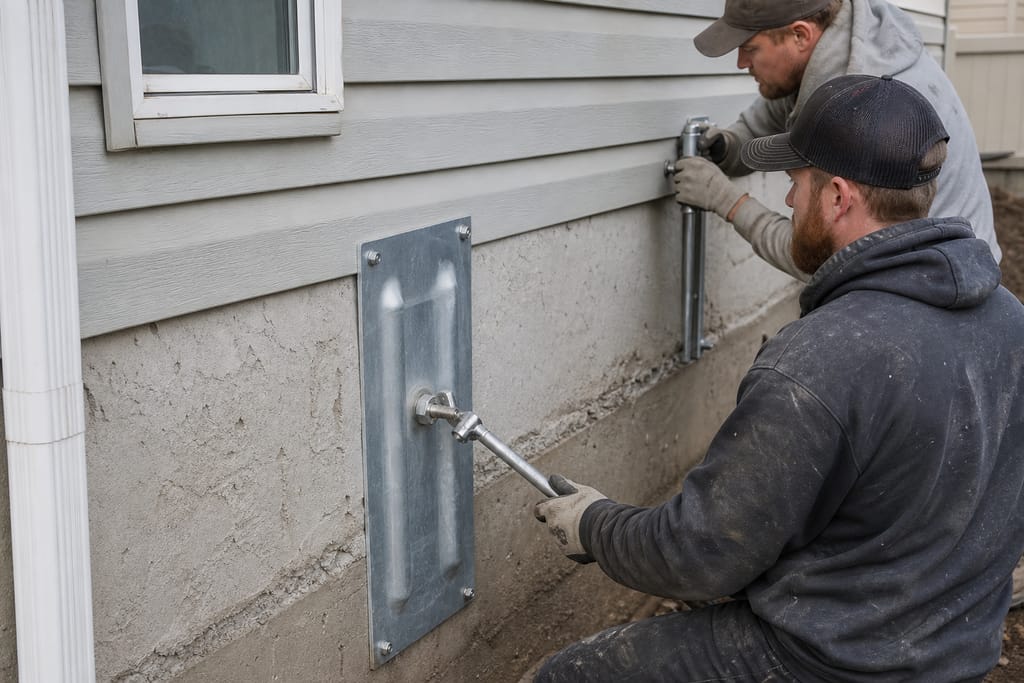
Wall Plates
Distribute anchor tension evenly across the wall surface to prevent point loading.
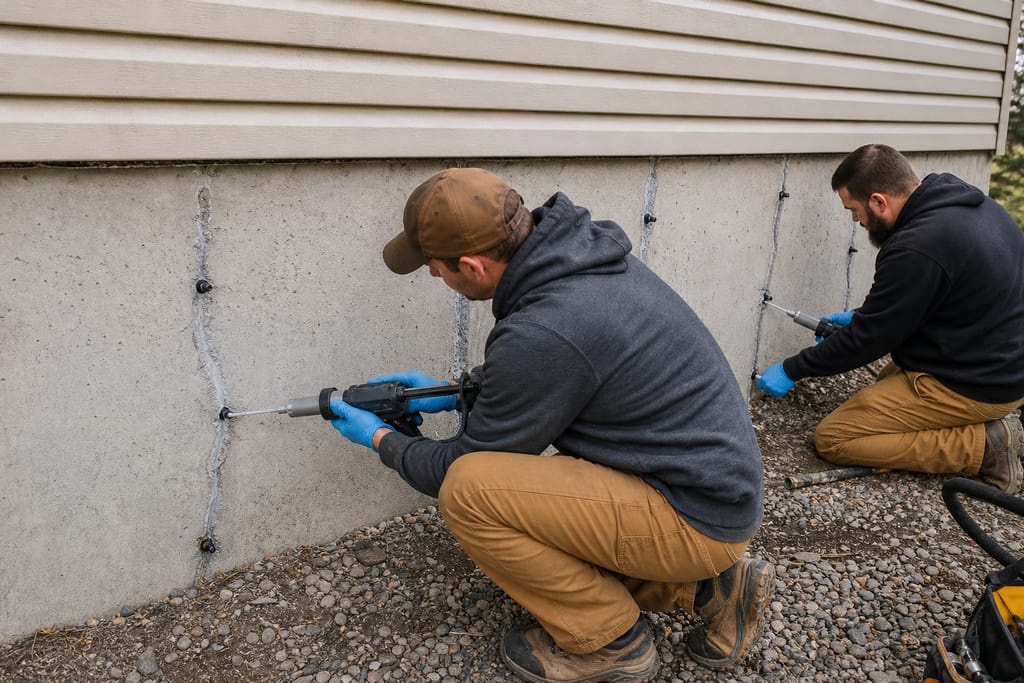
Epoxy Crack Filler
Seals cracks before reinforcement materials are applied over the wall.
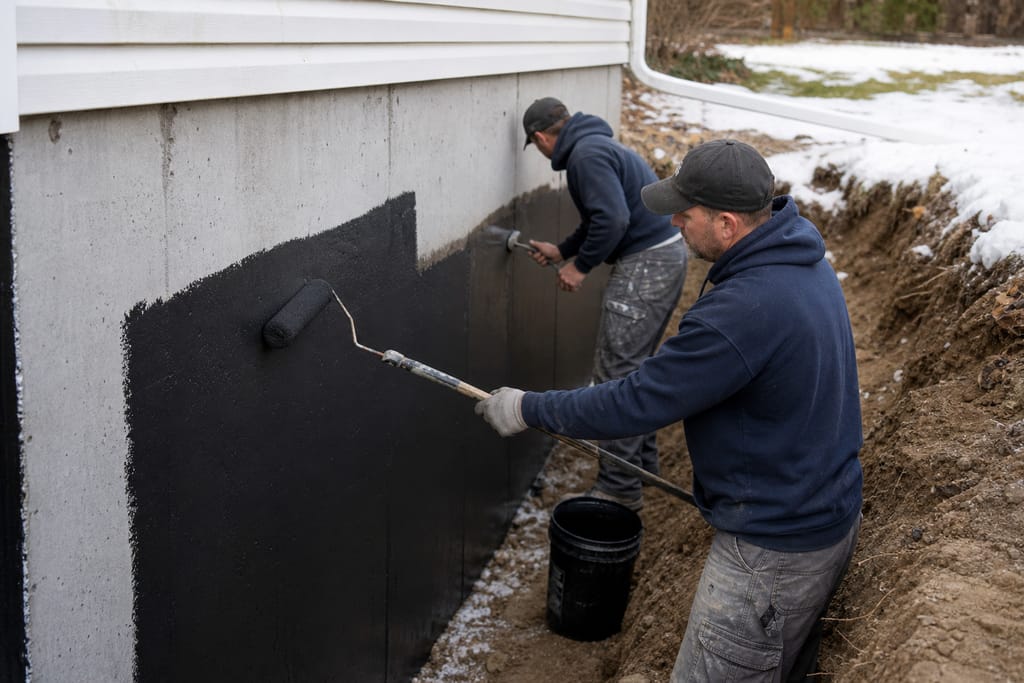
Moisture Barrier Coating
Helps protect reinforced walls from future water damage during freeze-thaw seasons.
Questions on materials?
Get a Free EstimateTimeline
How long does wall stabilization take?
- 01
Stage 1
a few daysA typical stabilization job moves from inspection to finished install inside , depending on wall length and chosen method.
- 02
Consult and measurement
same day - 03
Written plan and material selection
1–2 days - 04
Anchor or brace install
1 dayfor most single-wall jobs.
Need a schedule that fits?
Get a Free EstimateBefore & after
Before and after Wall Stabilization
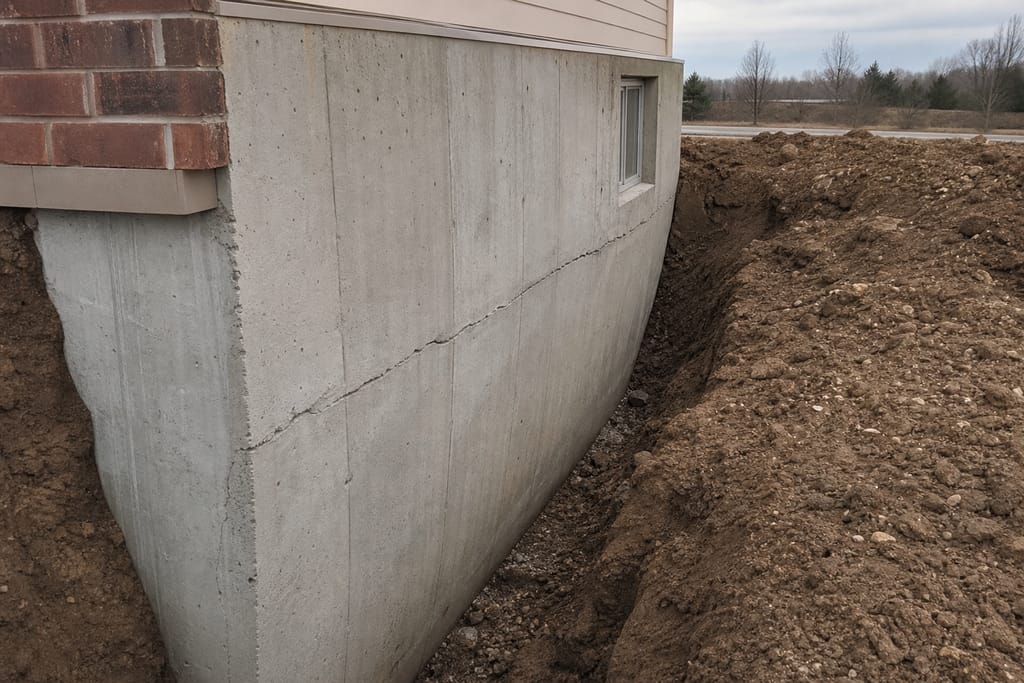
Before 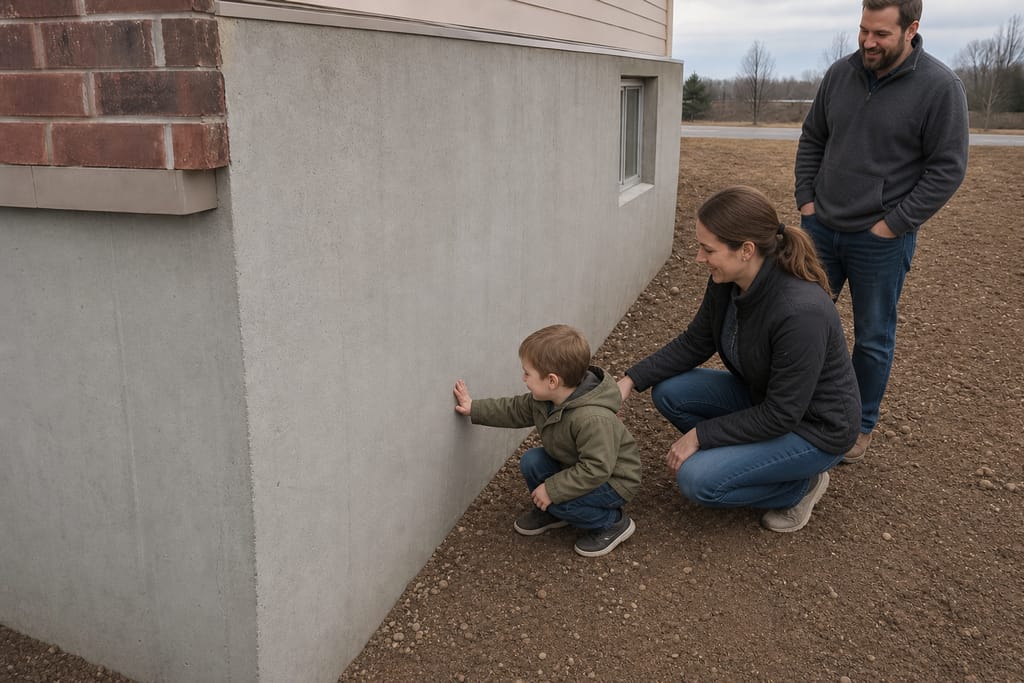
After
FAQs
Wall Stabilization FAQs
What's the difference between wall anchors and carbon fiber straps?
Anchors use yard-side plates to pull a bowed wall back, which works for more advanced bowing. Carbon fiber straps reinforce the wall in place without yard excavation and suit earlier-stage movement.
Can a bowing wall be straightened all the way?
Some walls can be pulled closer to plumb over time with anchor tensioning. Others are reinforced in their current position to stop further movement rather than fully straightened.
Do I need a permit for wall stabilization?
Structural bracing like anchors or I-beams usually needs a permit in Taylorsville and Salt Lake County. Minor carbon fiber reinforcement may not, depending on scope.
How much does wall stabilization cost?
Cost depends on wall length, bow severity, and which system fits. We give a written range after seeing the wall in person, no charge for the estimate.
What causes a basement wall to bow in the first place?
Saturated soil from snowmelt and rain builds hydrostatic pressure against the wall. Over repeated freeze-thaw cycles, that pressure pushes the wall inward until it cracks or bows.
Is a bowing wall an emergency?
Not usually overnight, but it won't fix itself and typically gets worse each wet season. Call sooner rather than later if you see new horizontal cracks or increasing bow.
Next step
Get a Wall Stabilization estimate in Taylorsville
Call (435) 518-2423 or request a free estimate, especially if you've noticed new cracking after the last rain or snowmelt.
More services
Other Foundation Repair services
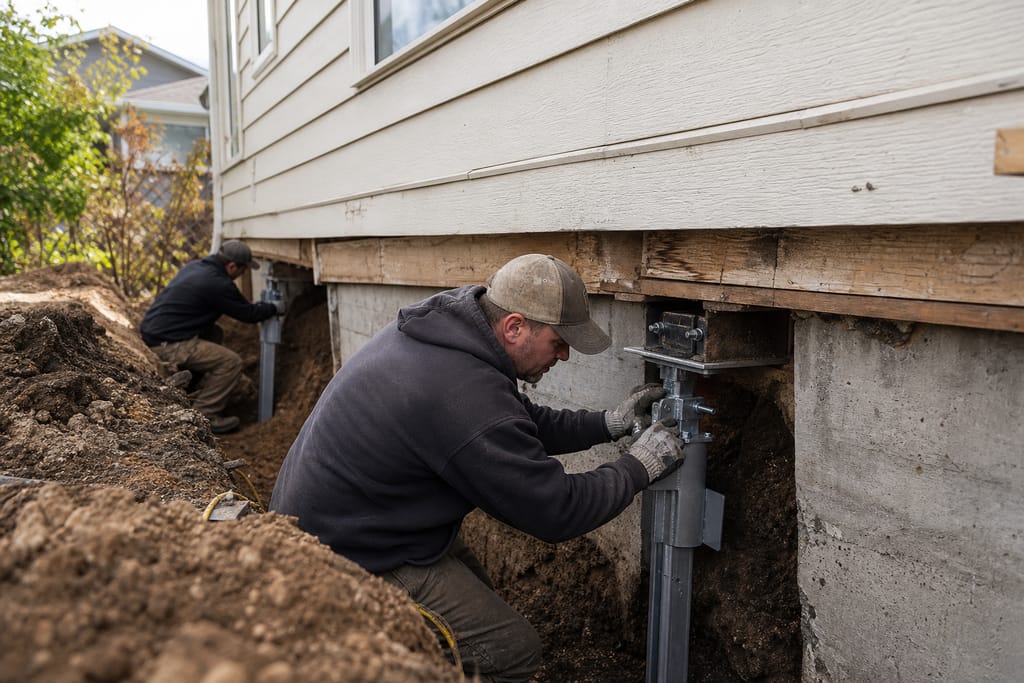
Foundation Repair
Foundation repair in Taylorsville with crack injection, piering, and wall stabilization backed by free estimates.
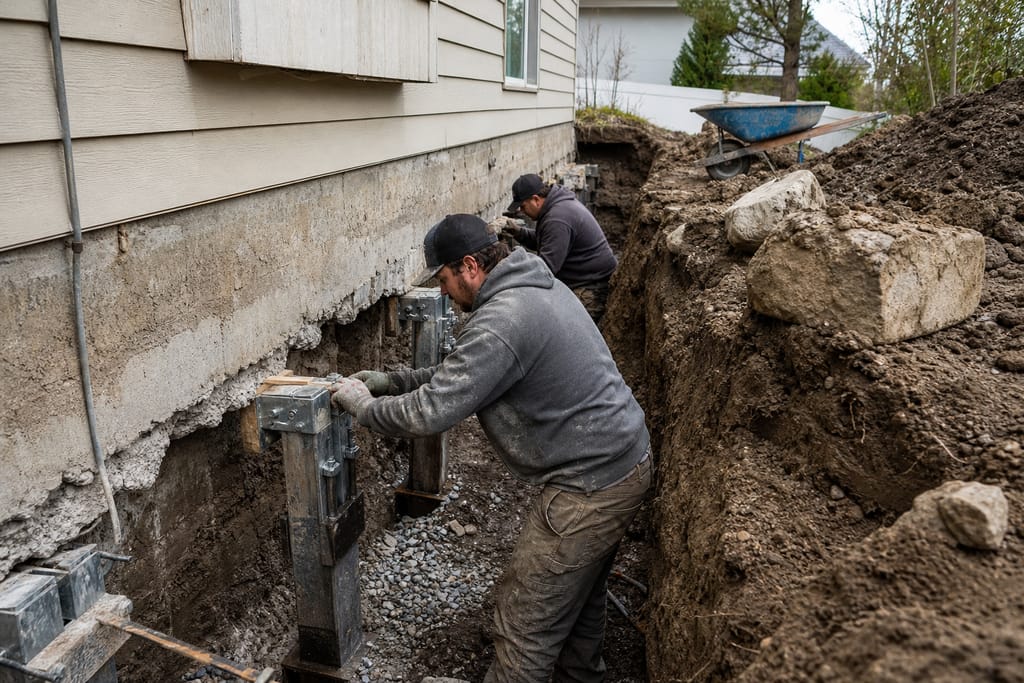
Piering and Underpinning
Steel push pier and helical pier underpinning in Taylorsville, UT. Engineered lift and stabilization with free estimates.
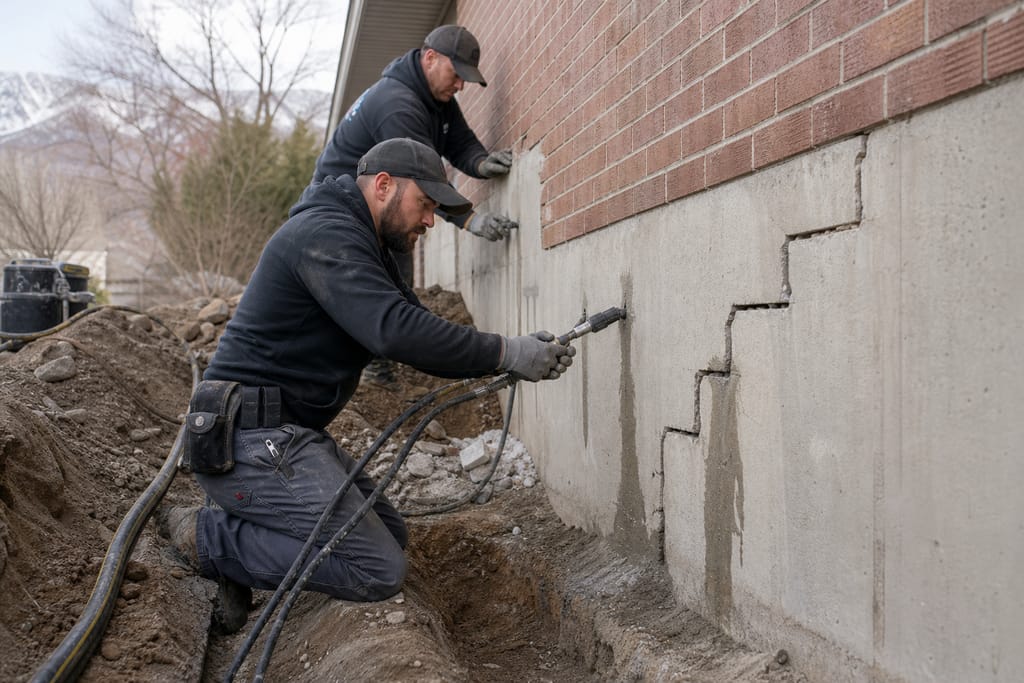
Foundation Crack Repair
Epoxy and polyurethane foundation crack injection in Taylorsville, UT. Structural diagnosis before repair, free estimates.
Ask about Wall Stabilization
Tell us about the project and how to reach you.